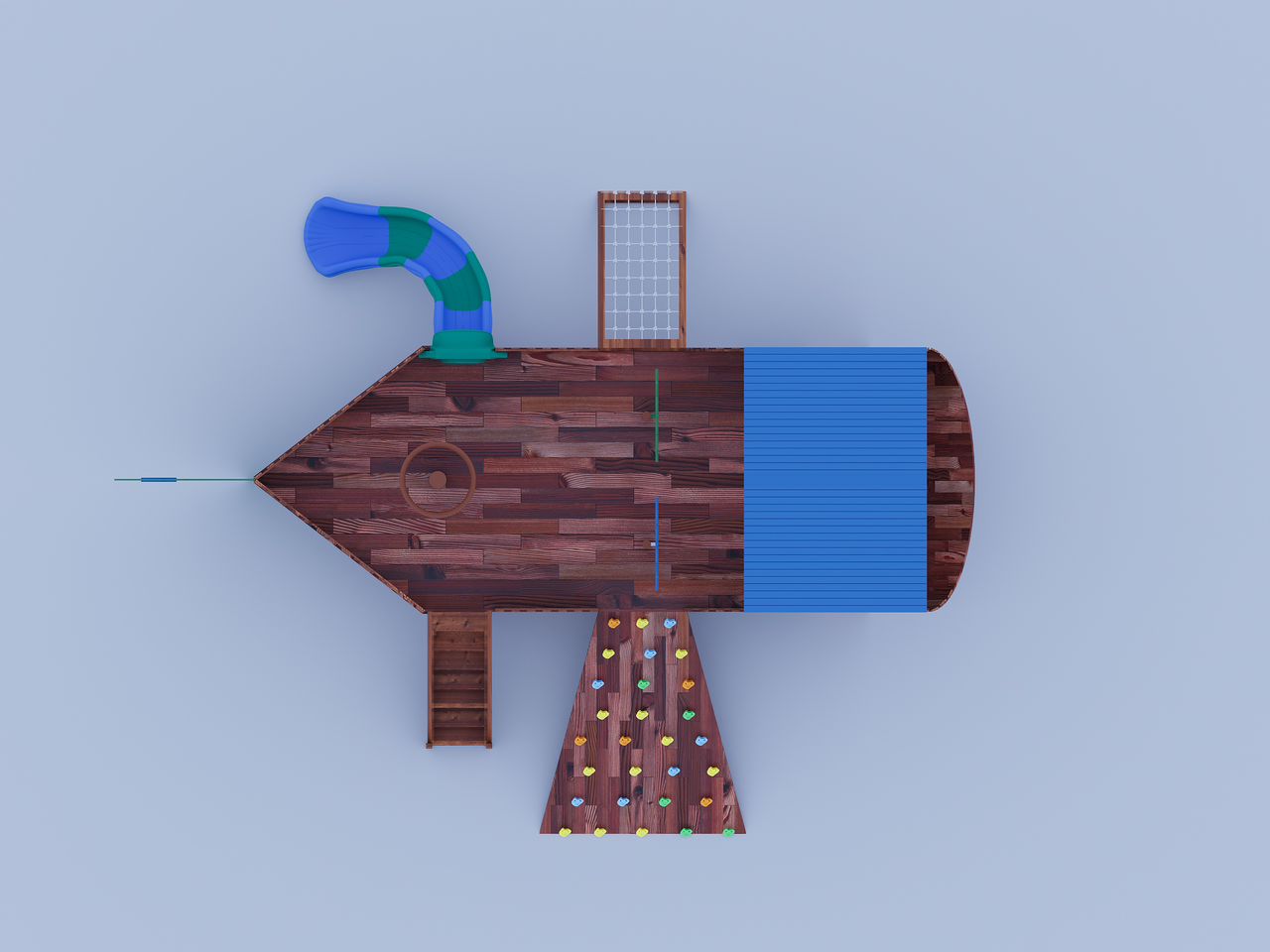
Concept reference: Golden Hind school playground project, Oman.
Quick answer: A useful bespoke themed playground brief explains what children will do, which parts of the brand or story must remain recognisable, and how the play environment will fit its site and daily operation. Give the designer these priorities alongside reference images, intended ages, dimensions and budget scope. Agree how the concept will be reviewed before commissioning detailed work.
A hotel character, a school identity or a destination's local story can be a starting point for custom playground design. The next decision is what that story means in a physical space. This guide is for owners and design teams who want a distinctive play environment and need to explain the project clearly to a manufacturer.
Define what needs to be bespoke
Begin by describing the particular problem a catalogue selection does not answer. You might need a recognisable landmark shape, a play route built around a narrative, an unusual room arrangement, or visual details connected to a brand. List these needs separately: a custom silhouette and a custom layout lead to different design discussions.
Mark each requirement as essential, preferred or open to exploration. This helps the team preserve the project's identity when a shape, finish or arrangement needs further development. It also makes it easier to compare proposals that interpret the same references differently.
Translate the story into a play programme
A moodboard communicates atmosphere. Add a short description of the activities the space should support: climbing, moving between destinations, role play, discovery, shared games or quieter participation. Explain the intended age groups and how accompanying adults and staff will use the space.
The following examples illustrate how to write a brief; they are not descriptions of completed HonPlay projects.
| Story idea | Play intention | Question for the design review |
|---|---|---|
| Forest discovery | Explore connected places and find small details | Which features create a route, and which are decorative? |
| Maritime adventure | Role play around boarding, lookout and shared journeys | How do children enter, move through and leave the structure? |
| Brand character | Meet a familiar character through a play activity | Which recognisable features can form part of the activity? |
| Local landscape | Explore changes of form, texture and viewpoint | How does the play area relate to the surrounding landscape? |
Review the proposed activities individually. A large decorative form does not explain its play value on its own. Ask the designer to label what each feature is intended to do and how users reach it.
Show what must remain recognisable
Supply the current brand palette, reference drawings and any approved character views. Explain which visual qualities matter: a roofline, facial expression, proportion, texture or colour relationship. A collection of unrelated inspiration images needs annotations so the team knows what you like in each image.
Record who can approve the use of the artwork and who will make design decisions. If an external brand owner or creative agency is involved, include its review stages in the programme. Separate the permission to use a design from the practical decision about how to manufacture it.
Describe the experience at a child's scale
Ask for views that explain entry points, transitions and the relationship between larger features and smaller details. An overall rendering can be useful for composition, while a close view may answer a different question about the experience inside the structure. Write down what each view needs to demonstrate.
Connect the theme to the site and daily operation
Give the designer a measured plan, relevant heights and photographs with labelled viewpoints. Mark existing columns, planting, paths, neighbouring uses and the boundaries of the equipment scope. For an indoor venue, the indoor playground site-survey checklist provides a more detailed starting point.
Include the operator in the concept review. Discuss staff sightlines, cleaning access, inspection access, storage and the replacement of frequently handled details. Identify which decorative parts must be accessible for maintenance and which questions need resolution before their final shape is approved.
Describe accessibility and participation goals in the brief. Ask the project team to review the proposed activities and routes against the users and requirements of the actual destination. A themed appearance alone does not establish who can use an activity.
Agree how colours, textures and special forms will be reviewed
Ask which features need a drawing, a physical sample or a model before approval. The appropriate review method depends on what you are deciding. A finish sample can help discuss colour and texture; it does not establish the performance of a complete structure.
For each sample, record its reference, purpose, reviewer and outcome. Confirm how an approved sample will be identified in the manufacturing specification. Where a concept contains a sculptural feature, agree the dimensions, important views and acceptable areas for further development.
The Golden Hind pirate-ship project record includes concept drawings, colour references and workshop stages. It offers an example of the decisions behind one themed structure. Use its documented process as discussion material, while setting specifications and approval stages for your own project.
Compare design proposals on the same scope
Send each shortlisted supplier the same brief and ask for a written response to its essential requirements. Request a marked-up concept or equipment schedule that distinguishes custom elements, selected standard components, decorative work and items supplied by others.
- Which play activities and visual requirements are included?
- Which dimensions, materials and interfaces remain provisional?
- What drawings, visualisations, samples and review rounds are proposed?
- Who will coordinate the destination's applicable requirements and project-specific documentation?
- What installation information, maintenance information and replacement-part references are included?
- Which changes would require a revised scope, price or programme?
Keep optional features visible as separate decisions. If a proposal reduces cost by changing a signature form or removing an activity, ask for that change to be identified rather than comparing only the final total. The playground equipment RFQ checklist can help organise the commercial comparison.
A short brief for a branded playground
We are planning a bespoke playground for [venue and location], serving [intended users]. Our story is [short description]. The three qualities we want visitors to recognise are [priorities]. Children should be able to [main play activities].
Attached are the measured site plan, annotated references and available brand files. Our essential custom elements are [items]; [items] remain open to exploration. The budget covers [scope], and the target opening date is [date]. Please identify design assumptions, proposed review stages, deliverables and information needed before a project-specific quotation.
Frequently asked questions
Do I need a finished design before contacting a manufacturer?
No. A site plan, a clear story and a prioritised list of activities can start the discussion. State which decisions are open and ask what information is needed for the next design stage.
Can a playground combine standard components and bespoke features?
Discuss that option with the designer. Ask the proposal to identify both and explain how they fit together. Judge the result against the play programme, site and visual priorities in your brief.
How much detail should a theme reference include?
Provide enough annotation to explain what should be preserved. A small set of clear references is more useful for decision-making than a large folder whose images suggest conflicting styles.
How should design changes be handled?
Keep a dated decision list and approved drawing revisions. Before accepting a change, ask which activities, interfaces, samples, quotation items or delivery assumptions need updating.
Discuss your bespoke themed playground
Explore HonPlay's custom playground design service, then send your site plan, theme references and custom requirements. Include your venue type, project stage, budget scope and target date so the first discussion can focus on the design decisions your project needs.