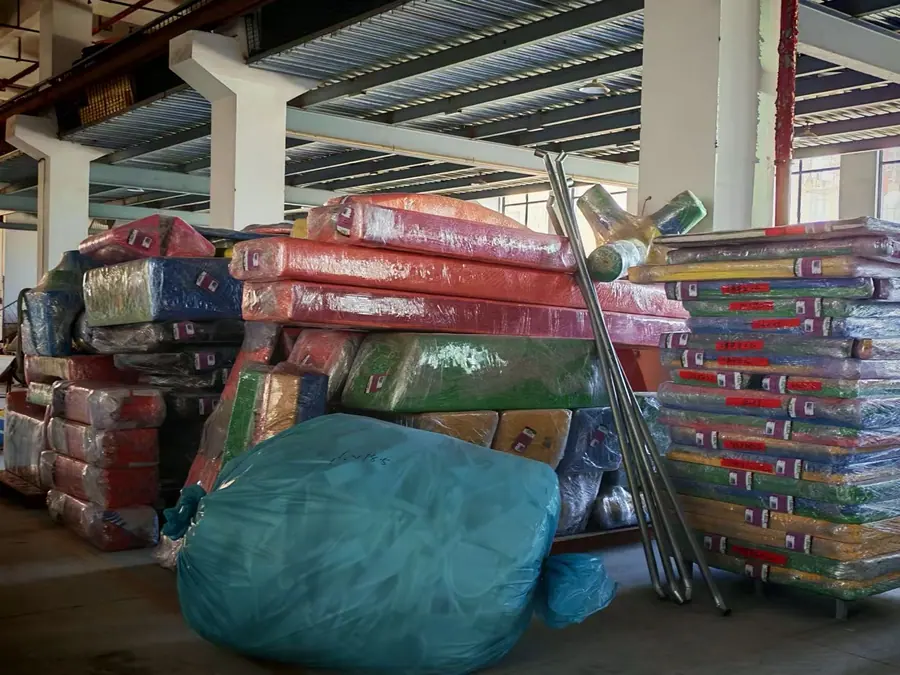
Quick answer: Order playground replacement parts using the original equipment identity, the part reference and an approved compatibility check. A matching photograph or bolt pattern is not sufficient for a safety-critical substitution. Record the replacement in the maintenance file and arrange the appropriate inspection before returning affected equipment to use.
This guide is for park operators, schools, resorts and distributors replacing worn or damaged components. It covers the information to collect and the decisions to document. It is not a repair instruction for an unidentified structure or a claim that HonPlay parts fit other manufacturers' equipment.
Identify the equipment before identifying the part
Find the equipment label, order record, installation drawing or original manual. Record the manufacturer, model, approximate installation date and any serial or project number. If the label is missing, photograph the complete structure and the affected assembly so a supplier can understand the context.
Describe what prompted the request: a missing component, visible wear, damage, a failed inspection or a planned stock replenishment. Keep suspected causes separate from confirmed findings. If there is a potential safety defect, have the responsible operator isolate the affected equipment and arrange competent assessment instead of continuing use while shopping for parts.
Build a parts request that can be checked
| Information | What to send | Why it matters |
|---|---|---|
| Equipment identity | Manufacturer, model, label and order or drawing reference | Connects the request to the original design |
| Part identity | Manual reference, item number and quantity | Separates similar-looking components |
| Photographs | Whole equipment, assembly location and close details | Shows how the component interacts with other parts |
| Measured geometry | Relevant dimensions, hole positions and interfaces with units marked | Supports identification without assuming equivalence |
| Material and finish | Known specifications, labels and exposure conditions | Flags differences hidden by appearance |
| Observed issue | Inspection finding and condition of connected components | Helps identify whether more than one part needs review |
| Destination and scope | Delivery location, installation responsibility and timing | Defines the supply and service request |
Use a marked drawing or a photo with numbered callouts when several parts are involved. Avoid descriptions such as “the small black connector” without a location reference. Ask the supplier to return the same numbered list with its proposed part codes and any unresolved questions.
What makes two playground parts compatible?
Compatibility includes the component's function, geometry, materials, connections and effect on the complete assembly. Some characteristics cannot be established with a tape measure. The original manufacturer or a competent assessor may need to evaluate the proposed replacement and its evidence.
Moving and load-carrying components
Springs, pivots, suspension components, ropes and anchors should be treated as identified assemblies rather than generic hardware. Ask which model and revision the proposed part is intended for, whether connected components must also be replaced, and what installation and inspection information accompanies it.
Do not infer load capacity, fatigue behaviour or movement characteristics from outside dimensions alone. A substitution that fits physically can still change the behaviour of the equipment. For rocking equipment, see the spring rider buying checklist for questions about complete spring assemblies and foundations.
Panels, covers and activity components
Check finished shape, thickness, edge details, openings, fixing locations and the intended material. A replacement panel may affect openings or the way children interact with the equipment. Review changes to graphics or cutouts as part of the component design, even when the request begins as a cosmetic refresh.
For HPL components, keep the exact grade and application in the material schedule. The HPL panel procurement guide explains why the material name alone does not establish suitability for every outdoor component.
When the original part is no longer available
Ask the manufacturer whether it offers an approved successor part or a conversion kit. Request the compatibility statement, affected model list, installation instructions and any limitations. Keep those documents with the original equipment record.
If the original supplier cannot help, obtain a qualified assessment of the alternatives. Options may include a documented adaptation, replacement of a larger assembly or retirement of the affected equipment. Do not commission an unverified copy simply because it appears cheaper or faster.
The CPSC Public Playground Safety Handbook includes maintenance guidance and emphasizes following manufacturers' instructions. Use that principle in the purchasing process: the replacement decision and the installation instructions should be traceable, rather than relying on a catalogue resemblance.
Agree on the installation and handover
Before ordering, confirm who will install the part, what information the installer needs and who will assess the completed work. The quotation should identify whether it includes fasteners, installation instructions, specialist tools or supervision. Ask what inspection is required before reopening the affected activity.
Record the delivery, part identification, installer, work date and inspection outcome. Update the equipment file if an approved successor part changes the future spare-parts reference. Preserve photographs of the completed assembly alongside the paperwork where useful.
Build a practical spare-parts plan
Use the equipment register and maintenance history to decide which parts to hold locally. Ask the manufacturer about commonly replaced items, storage requirements and supply arrangements for your actual product models. Avoid buying a generic box of components that nobody can match to an installed unit.
- Group parts by equipment model and approved component code.
- Separate consumables from complete replacement assemblies.
- Record whether a component requires assessment or special installation.
- Label stock with the applicable drawing or manual reference.
- Review the list when equipment or part revisions change.
For routine inspection planning rather than individual parts procurement, see the playground inspection and maintenance guide.
A replacement-parts request you can copy
We operate [equipment model/project] installed in [location/year]. We need [quantity and part references] for [reported issue]. Attached are the equipment label, overall photographs, numbered close-ups, relevant measurements and available drawings.
Please confirm whether you can identify and supply a compatible part. State the exact part code, applicable equipment models, included components, supporting documents, installation requirements and any further assessment needed. Quote delivery to [location] and identify availability, warranty scope and exclusions.
Frequently asked questions
Can I use parts from another manufacturer?
Only after compatibility and the effect on the equipment have been established by the appropriate parties. Do not assume that a universal-looking component is approved for your structure.
Are photos enough to order a replacement?
Photos help identify the assembly, but part references, dimensions and documentation may still be necessary. Ask the supplier to identify remaining uncertainties before you approve the order.
Should I replace only the visibly damaged component?
The assessment should consider connected parts and the cause of the damage. An isolated replacement may not resolve an underlying assembly or installation issue.
Can HonPlay guarantee a match for unidentified equipment?
No match should be assumed. Send the available identification and drawings so the team can discuss whether it can support the request and what additional verification is needed.
Discuss parts support with HonPlay
Send HonPlay your equipment details and numbered parts request. For new purchases, ask for the manual and spare-parts schedule with the quotation so future maintenance has a clear starting point.