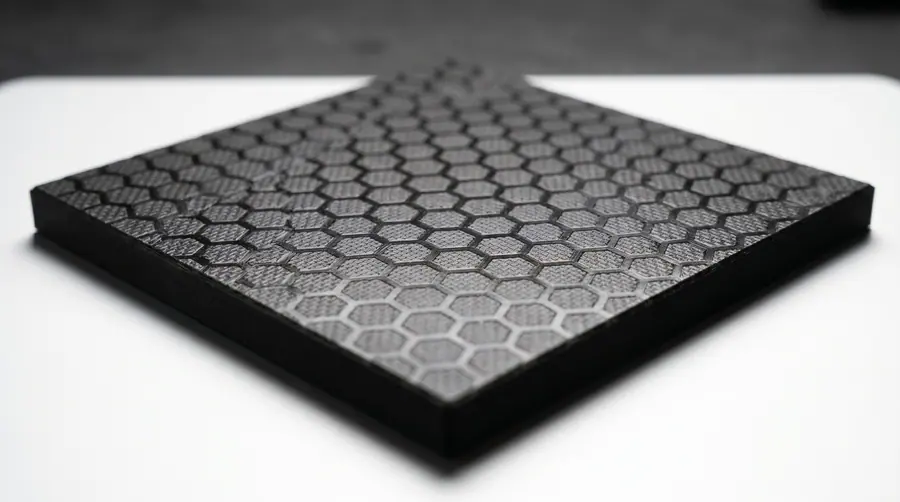
Quick answer: Specify HPL playground panels by the exact exterior-grade product, thickness, finish and intended component. Ask for traceable weathering evidence covering the proposed colour, plus drawings that address support, fastenings and exposed edges. “UV-resistant HPL” is a useful starting description, but it is not a complete purchasing specification.
This guide helps playground buyers turn a material preference into an RFQ that suppliers can price consistently. The key question is whether the documented panel and its installation are suitable for the particular barrier, activity panel, canopy or other part being purchased.
What does exterior-grade HPL mean?
HPL stands for high-pressure laminate. Exterior compact HPL belongs to a specific material category: BSI identifies EN 438-6 as covering exterior-grade compact laminates at least 2 mm thick, with performance classifications for outdoor exposure. It includes standard and flame-retardant grades and distinguishes moderate from severe exterior conditions. Source: BSI, EN 438-6 scope.
That 2 mm threshold defines the standard's scope; it is not a recommended thickness for a playground component. A material classification does not establish that a particular panel is suitable as a barrier, seat or deck. The component's function, dimensions, supports, connections and applicable equipment requirements still need assessment.
Start by asking whether the quotation specifies compact exterior HPL, another laminate construction or a polyethylene panel. A catalogue category containing both PE and HPL does not identify the material used in every individual part. Put the actual material against each panel on the bill of materials.
What evidence supports a UV-resistant HPL claim?
Request a technical sheet or report that names the product, test method and edition, exposure conditions, measured outcome and any limitations. Colour retention and surface appearance may be reported separately. An exposure duration without its method and result gives the buyer little basis for comparison.
For example, Abet Laminati's MEG technical sheet reports UV and artificial-weathering assessments using contrast and appearance ratings. It distinguishes specified requirements from typical performance and includes qualifications for particular decors and exposures. This illustrates an evidence format; it does not identify the material supplied in a HonPlay order. Source: Abet MEG technical sheet.
Match the report to the colour and finish
Give the supplier the exact decor code, finish, number of exposed faces and any proposed printing or graphic treatment. Ask whether the evidence applies to that combination. If a report covers a different product, request the manufacturer's written explanation of its relevance rather than assuming the result transfers.
Record the acceptance criteria before ordering. For a phased project, also agree how replacement panels will be identified and whether later batches may differ in appearance. Keep an approved physical sample and its product reference with the purchase records.
Do not turn a laboratory exposure into a lifespan promise
A procurement comparison should preserve the test's actual conditions and ratings. Do not translate a number of laboratory hours into a guaranteed number of years at the park without a defensible basis supplied for that application. Review the written warranty separately, including geographic limits, exclusions and the remedy offered.
HPL playground panel specification checklist
| Specification | Information to request | What it resolves |
|---|---|---|
| Product identity | Manufacturer, product name, exterior grade and batch traceability | Connects the delivered material to the evidence |
| Component function | Barrier, decorative panel, activity board, canopy or other use | Defines what the part must withstand |
| Geometry | Thickness, cut dimensions, tolerances, openings and edge details | Allows drawing and sample checks |
| Colour and surface | Decor code, finish, exposed faces and graphic process | Defines the appearance and evidence scope |
| Outdoor performance | Weathering method, results, limitations and applicable warranty | Makes UV and weather claims comparable |
| Support and fixings | Support spacing, holes, fasteners and movement provisions | Links the material to the assembled component |
| Service | Cleaning instructions, inspection criteria and replacement references | Supports maintenance after installation |
Check machining, attachment and exposure together
Request an approval drawing for each panel type. It should show finished edges, cutouts, holes and the attachment arrangement. Ask the equipment designer to confirm structural suitability and assess openings, projections and accessible connections within the complete playground assembly.
Follow the actual panel manufacturer's fabrication and movement guidance. For example, Abet's MEG facade manual distinguishes a fixed point from other holes with clearance for expansion and contraction. That illustrates why fastening details matter; a facade fixing schedule should not be copied directly into playground equipment. Source: Abet MEG technical manual.
Describe whether panels are vertical, inclined or horizontal and whether they receive direct sun, irrigation or frequent cleaning. Abet lists separate products for exterior horizontal applications and outdoor flooring, which reinforces the need to confirm the intended application instead of treating every exterior panel as interchangeable. Source: Abet exterior product range.
Send this information with your HPL panel RFQ
- Project country, climate exposure and the equipment's intended user group.
- Panel function, quantity, drawings and the applicable equipment specification.
- Proposed material grade, thickness, colours, finish and exposed faces.
- Any routed graphics, printing, unusual shapes or horizontal applications.
- Required samples, technical sheets, weathering evidence and inspection records.
- Supply scope: panels alone or finished equipment, packing and destination.
- Requested delivery date, replacement-panel needs and warranty expectations.
Ask suppliers to identify exclusions and proposed substitutions explicitly. Approve the final material schedule and drawings before cutting begins, and require written approval for any later change of panel product or grade.
Frequently asked questions
Is every HPL panel suitable outdoors?
No. Specify the exterior product and review its documentation. The name HPL alone does not confirm outdoor performance or suitability for a particular playground part.
What thickness should HPL playground panels be?
There is no universal thickness. Request a component-specific selection based on function, panel size, supports, openings, fixings and the equipment assessment. Do not choose solely by matching a photograph.
Does UV-resistant mean the colour will never change?
No. Ask for the documented test outcome and applicable warranty. Compare the proposed colour and finish against the evidence, including any restrictions, instead of treating UV resistance as an unlimited promise.
Does an exterior HPL grade certify the playground?
No. Material documentation addresses the panel. The finished equipment and installation require their own assessment against the project's applicable requirements.
Discuss your panel specification with HonPlay
Explore the HonPlay PE/HPL playground range, then send your panel drawings, climate details and quantity. Request a quotation identifying the proposed materials and available supporting documents so your team can review the equipment specification before placing an order.